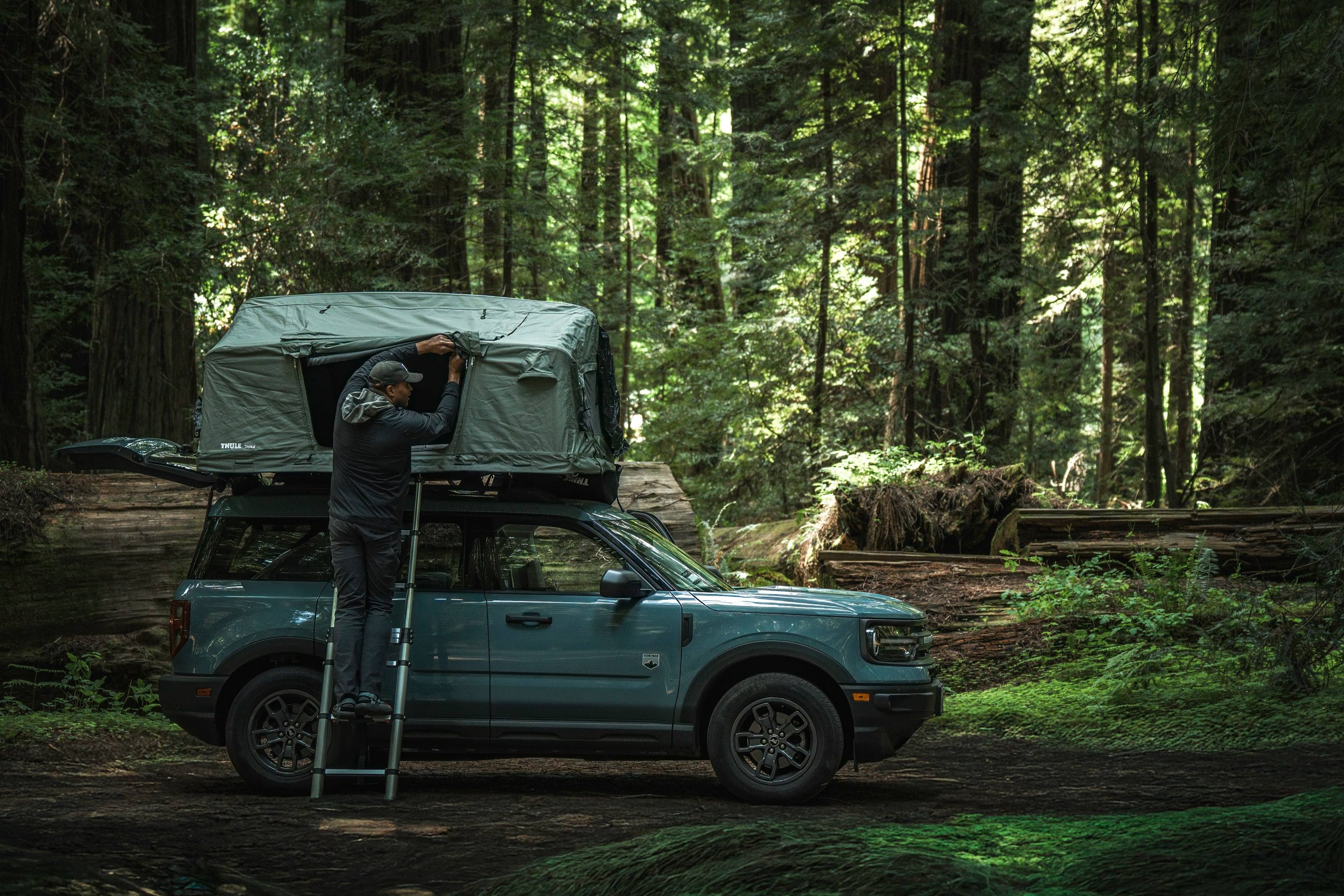
A roof tent gets you off the ground and sets up in minutes. It also puts weight on the highest point of the vehicle, and the rack underneath matters as much as the tent. A dealer who installs will check your roof's load ratings before anything else.
What they sell and install
01Hard-shell and soft-shell roof tents
02Awnings, annexes and insulation
03Racks and crossbars rated for the load
04Installation and removal
05Parts: covers, zippers, struts and poles
How to choose a roof tent
Open it, climb into it and close it before you buy it.
01Know your two roof numbers: the dynamic rating for driving and the static load for camping with people inside. They are different, and the rack has its own.
02Hard shells open fastest and cut through wind. Soft shells give more space for the weight and the money.
03Check the mattress, the ladder angle at your vehicle's height, and whether it closes with bedding inside.
04Ask about parts and repairs before you need them.
05Measure your garage door.
What to have ready before you ask for a quote
The roof decides what is possible.
01Vehicle, and what is on the roof or bed now
02How many people sleep in it
03The weather you camp in
04Garage height, if it lives indoors
05A budget range for the tent and the rack together
Questions people ask
Will a roof tent fit my vehicle?
Almost any vehicle can carry one with the right rack, but check the roof's dynamic load rating in the owner's manual and the rack's rating. The lower number is your limit while driving.
Hard shell or soft shell?
Hard shells are quicker, quieter in wind and better in rain and snow. Soft shells sleep more people for less money and weight, and take longer to pack. If you move camp every day, speed matters more than you expect.
Does a roof tent hurt fuel economy?
Yes, some, and you will hear it on the highway. Lower-profile tents and a fairing help. It is a trade most people accept for the sleep.
Free build quotes
Looking for roof tent dealers? Tell us about the project and get free quotes.