Three kinds of camping
Developed campgrounds have numbered sites, toilets, often water, usually a fee and sometimes reservations. They are the easy night on the way to somewhere.
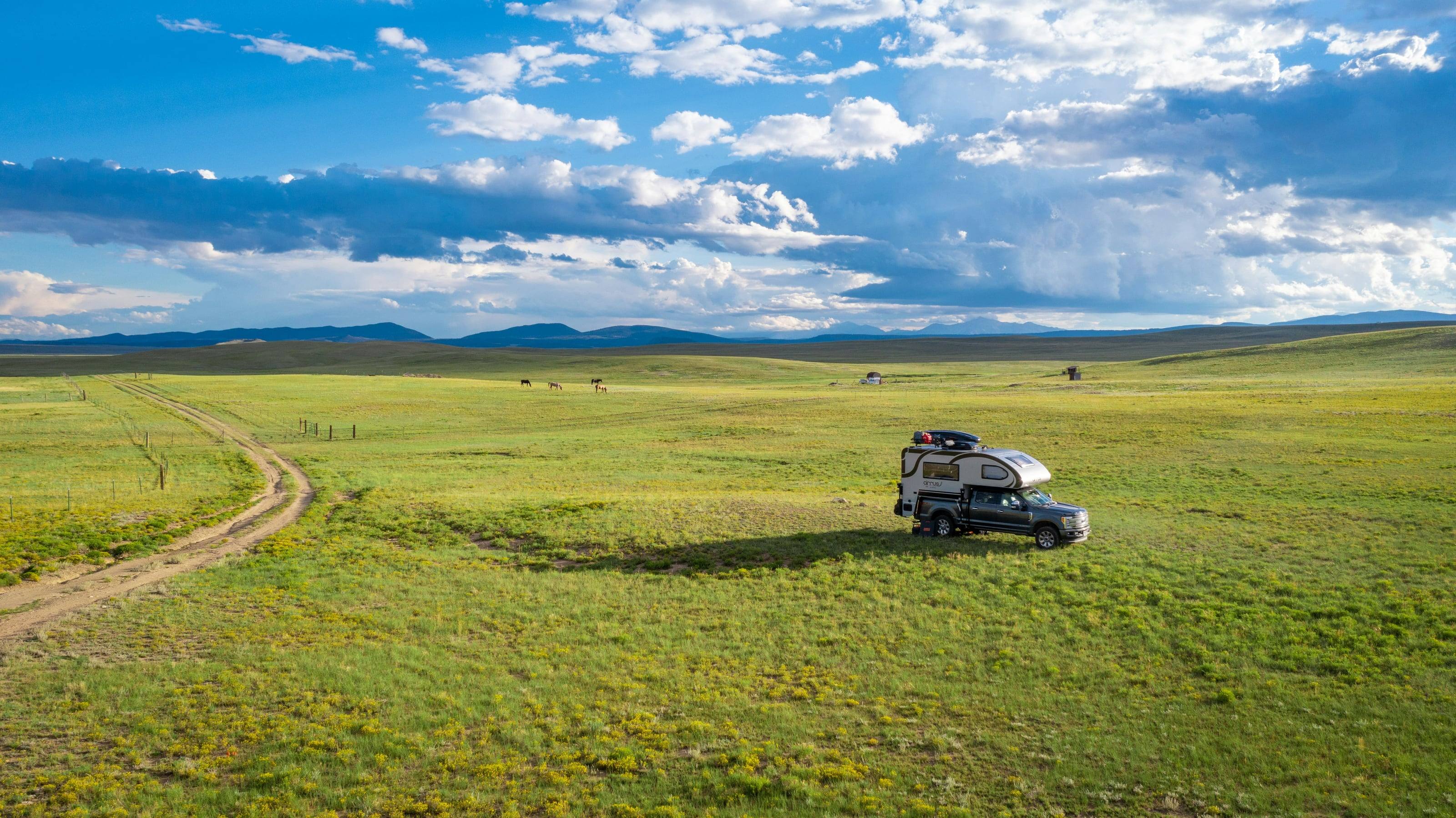
Dispersed camping means no facilities and no fee. It is allowed on much Bureau of Land Management and National Forest land, within local rules on where you can pull off, how long you can stay and whether you can have a fire.
Private campgrounds and ranch stays add showers, laundry and hookups: the reset day in the middle of a long trip.
How to find a good one
The managing agency's own page is the only source for current status.
- 01Check the agency page for closures, fire restrictions and water before you drive in.
- 02Check the stay limit. Many public lands use fourteen days within a set period, but it varies by office.
- 03Check vehicle length limits and the condition of the access road.
- 04Arrive before dark, and have a second option.
Camp so it stays open
Most closures of dispersed areas follow the same pattern of trash, new fire rings and driving off the track.
- 01Use sites that already exist rather than making new ones.
- 02Pack out everything, including human waste where it is required.
- 03Have fires only where and when they are allowed, and drown them.
- 04Leave gates as you found them.
Questions people ask
Is dispersed camping legal?
On much BLM and National Forest land, yes, within local rules on where you can pull off, how long you can stay and whether fires are allowed. Rules are set by the local office and change with conditions, so check before you go. The public land map shows who manages the ground.
How long can I stay?
Many public lands use a 14-day limit within a set period, but it varies by office and by area. The campground details on the public land map show the stay limit the BLM publishes for each site.
Do I need a reservation?
For popular developed campgrounds in season, often. Many public campgrounds are first come, first served. Recreation.gov handles reservations for most federal campgrounds that take them.