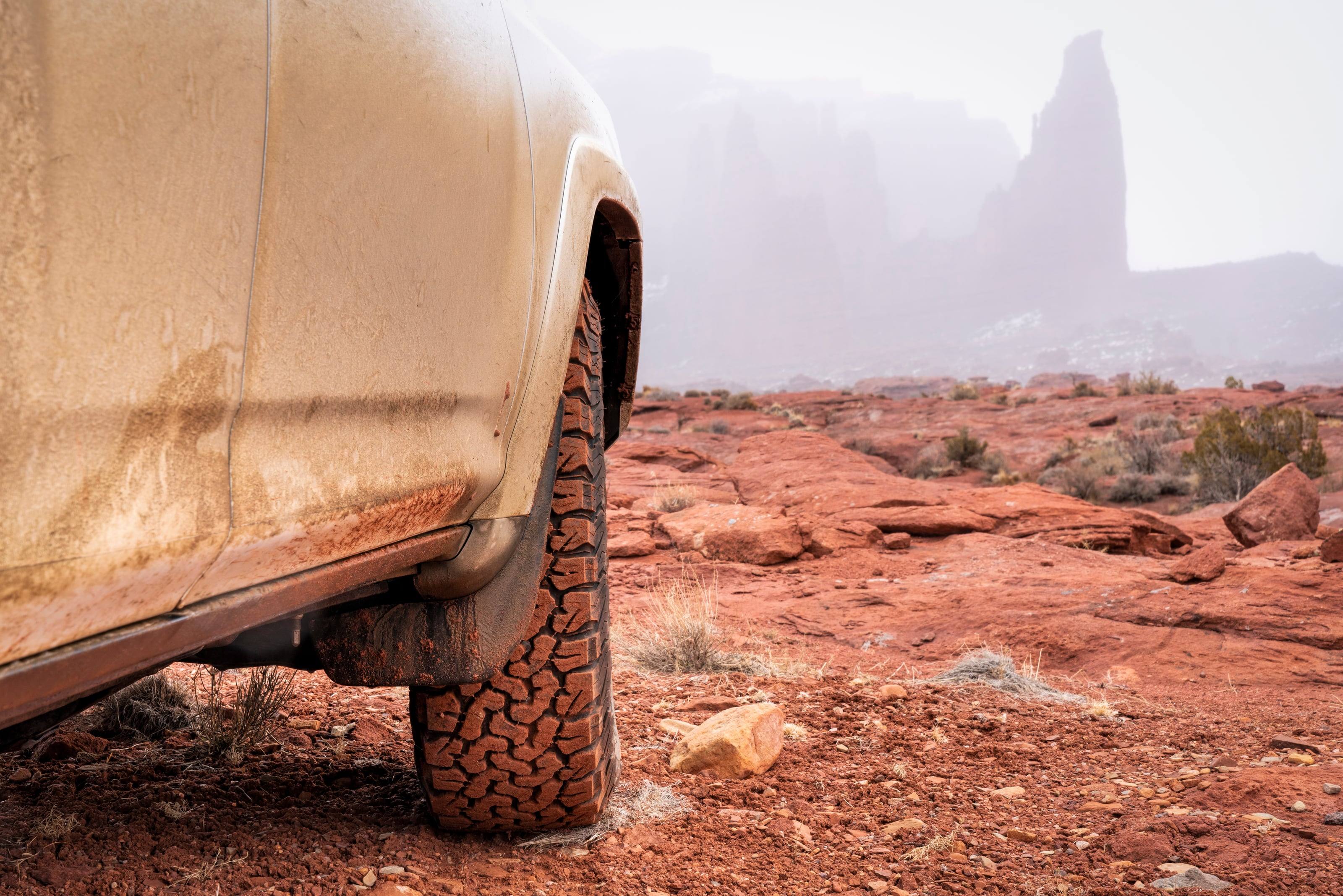
Tires are the only part of the vehicle that touches the ground, and on a loaded rig they work close to their limits. A good tire shop starts with load rating and size, then tread. It will also tell you when the tire you want will rub, need different wheels or throw off your gearing.
Expect help with
01Choosing a tire by load, terrain and season
02Wheels with the right offset and load rating
03Mounting, balancing and tire pressure sensors
04A matching full-size spare
05Alignment, rotation and repairs
How to choose tires for overland travel
Tread pattern is the last decision, not the first.
01Match the load rating to your real axle weights, not to the badge on the fender.
02All-terrain tires suit most overland travel. Mud-terrains are louder, heavier and wear faster, and earn it only in real mud and rock.
03Buy five. A matching full-size spare that you rotate in is worth the money when the nearest tire shop is a day away.
04Check the wheels too. Wheels have load ratings, and the wrong offset stresses bearings and rubs.
05Ask whether the shop can move or reprogram your tire pressure sensors.
What to have ready before you ask for a quote
A tire quote is quick when the shop knows what the tire has to carry.
01Vehicle, current tire size and wheel size
02Lift height, if any
03Loaded weight, or a list of what is on the vehicle
04Where you drive most: pavement, gravel, rock, sand, snow
05A budget range for five tires
Questions people ask
What does load range mean?
It describes how much weight a tire can carry at a given pressure. Heavier builds, vans and truck campers usually need a higher load range than the vehicle came with. The tire's sidewall and the placard in the door jamb are the places to start, and a tire shop can work through the numbers with you.
How big can I go?
Every platform has a size that fits at stock height, a size that fits with a modest lift, and a size that needs trimming and gears. Tell the shop your lift and wheels and ask what fits without rubbing at full steering lock and full compression.
Should I air down?
On washboard, sand and rock, lower pressure gives a better ride and more traction and is easier on the vehicle. It also means you need a way to air back up before pavement. How low depends on your tire, your weight and your speed, so ask your tire shop and start conservatively.
Free build quotes
Looking for tire shops? Tell us about the project and get free quotes.