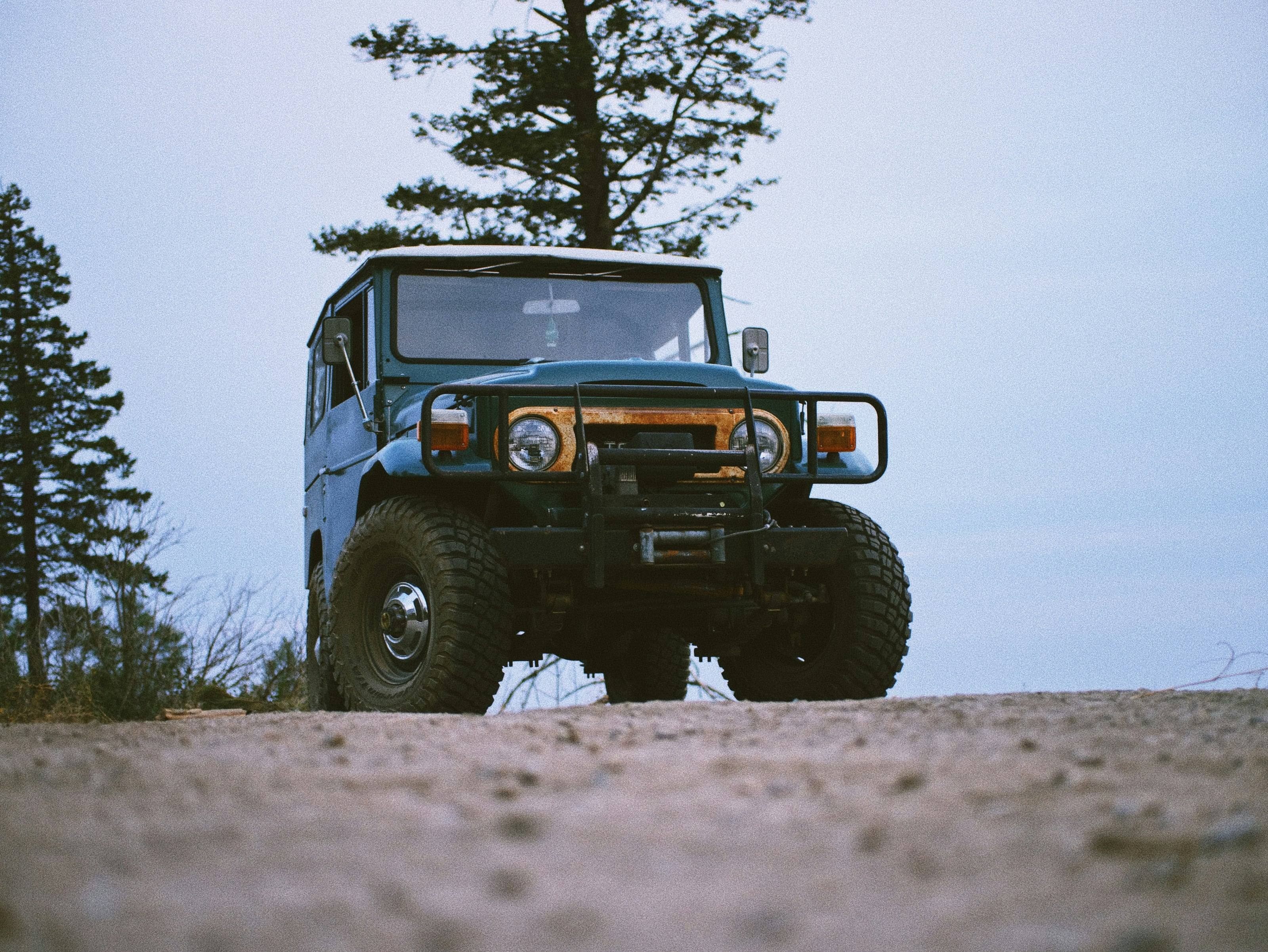
Every vehicle that leaves pavement gets stuck sooner or later. Recovery gear is what turns that from the end of a trip into a short delay.
It is also the most dangerous equipment most travelers carry. A strap or winch line under load stores energy, and Australia's product safety regulator records deaths and serious injuries from recovery straps used badly. So this guide spends as much time on ratings, attachment points and inspection as on what to carry. Technique has its own guide, and neither replaces a day with an instructor.
What recovery gear is for, and the order to reach for it
Recovery gear does one of three jobs. It puts grip back under the tires, it lets a second vehicle pull you, or it lets you pull yourself toward an anchor. Each step up that list stores more energy, so climb it slowly.
Most stuck vehicles come out with a shovel, lower tire pressure and traction boards. One board maker's instructions sum up the approach: stop as soon as the vehicle fails to proceed, because spinning wheels only bury it deeper; dig until the wheels, not the underbody, carry the weight; wedge the boards hard against the tread, pointing where you want to go; then pull away gently in low range. Wheelspin melts the lugs off a board.
Reach for them in this order
- 01Your eyes and a shovel. See what is holding the vehicle before anything else.
- 02A tire gauge and deflator. A softer tire has a longer footprint, and that is often enough.
- 03Traction boards under the wheels that are doing the driving.
- 04A kinetic rope and a second vehicle, joined at rated recovery points.
- 05A winch: slow, controlled, and the only one that works when you are alone.
Source 6
Working load limit and breaking strength: what the numbers mean
Two kinds of number are marked on rated gear, and they are not interchangeable.
Minimum breaking strength is a failure figure. The Cordage Institute, the rope industry's standards body, defines it as the lowest permissible break strength for a rope product. Straps and ropes are usually sold by this number.
Working load limit is a use figure: the load that must not be exceeded in service. The Institute derives it by dividing the minimum breaking strength by a design factor, a term it prefers to safety factor because a ratio is not an assurance of safety. Shackles and snatch blocks are usually marked with a working load limit.
Neither number allows for shock. The Institute notes that the dynamic effects of a suddenly shifted or arrested load are often well in excess of the rated limit. That is why a winch line is never jerked, and why the one tool you do take a run-up with, a kinetic rope, is built to stretch.
When you match a strap to a shackle, compare breaking strength with breaking strength.
Source 5
Rated recovery points come before anything you attach to them
A rope is only as strong as what it is tied to. Before buying anything that pulls, find out where your vehicle can be pulled from. The owner's manual shows the factory points, if there are any.
Australia's product safety regulator, which enforces a mandatory standard for recovery straps, says to use a strap only with proper recovery points, because its force is likely to break or snap off ordinary attachment points such as tie-down eyes, tow balls, towbars, bull bars and suspension components.
If your vehicle has no rated points, fitting them is the first purchase. Look for a closed eye or a point that takes a shackle pin, a rating from the maker, and a shape that lets the shackle line up with the pull instead of loading it sideways.
Do not skipNever recover from a tow ball. The regulator lists tow balls among the attachment points a recovery strap is likely to break or snap off. ARB's recovery guide adds that tow balls are not made of high tensile material, have failed under recovery loads, and can become lethal missiles.
Source 2
Kinetic ropes, snatch straps, tow straps and tree savers
Four things that look alike do different jobs.
A kinetic rope or snatch strap is nylon and built to stretch. The recovering vehicle drives off, the rope stretches, and the stored energy eases the stuck vehicle out. A rope stretches further than a flat strap, so the pull arrives more gently.
A tow strap, a winch extension strap and a tree saver are polyester and barely stretch. They are for towing a rolling vehicle, lengthening a winch line and wrapping an anchor. Take a run-up on one and the shock goes straight into both vehicles.
ARB's recovery guide recommends a snatch strap with a minimum breaking strength of two to three times the gross vehicle mass, matched to the lighter of the two vehicles. Bigger is not safer: a strap too heavy for a light vehicle does not stretch as intended and puts more stress on the recovery points. The same guide says a strap can lose up to 20% of its strength when wet, that straps need rest between pulls because heat builds in the fibers, and that every hook, shackle and pin in the line should have a breaking strength equal to or greater than the strap's.
Source 3
Soft shackles and steel shackles
A shackle joins a rope's eye to a recovery point, or closes a tree saver around an anchor.
Steel bow shackles should be forged and load rated. Crosby, which makes them, says the working load limit, the size, a traceability code and the maker's name should be clearly marked in the bow. An unmarked shackle has no place in a recovery kit. The same guide puts the design factor for carbon steel shackles at a minimum of 5 to 1, ultimate load over working load limit, which is why a shackle stamped with a modest figure can belong in line with a strap labeled with a much larger one.
Load a shackle in line. Crosby allows side loading on screw pin shackles only with a reduced working load limit. A properly heat-treated shackle deforms before it fails, so a bow that has opened up is a warning. Retire it.
Soft shackles are spliced from synthetic rope. They weigh almost nothing, cannot rust, and put far less mass into the air if something else lets go. Their weakness is abrasion and sharp edges. Use them on smooth, rounded recovery points and inspect them as you would a rope.
Do not skipNever use a shackle to join two straps or ropes. ARB warns that a bow shackle between two straps may become a lethal missile if a strap breaks. Join straps only by the method their maker shows, or use a longer rope.
Source 4
Winches and the rigging that goes with them
A winch needs no second vehicle. It is a system: the winch, a mount rated to carry it, a battery and charging system that can feed it, and the rigging between hook and anchor.
Warn's winching guide sizes a winch by taking the gross weight of what you intend to pull and multiplying by 1.5, without exceeding the rating of the winch or its rope. Use the loaded weight of the vehicle, not the brochure weight. The rated pull is only there on the first layer of rope on the drum, and every extra layer costs pulling power, which is one reason to run out plenty of line or double it through a block.
Steel cable tolerates abrasion but is heavy and grows barbs that slice hands. Synthetic rope is light, and needs protecting from sharp edges, heat and grit. Warn requires wraps to stay on the drum either way: five of steel, ten of synthetic.
What goes in the winch bag
- 01Heavy leather gloves, worn every time the rope is handled.
- 02A tree saver, which Warn calls a tree trunk protector, to keep the rope off the bark and off itself.
- 03Rated shackles to close the tree saver and take the hook.
- 04A snatch block, or a recovery ring for synthetic rope, to change the direction of a pull or double the line for more pulling power.
- 05A damper to lay over the line midway between winch and anchor.
- 06The hook strap supplied with the winch, so fingers never go near the fairlead.
Do not skipWarn's prohibitions are short. Never hook the rope back onto itself. Never use a recovery strap in a winch pull, because it stretches and stores energy. Never use the winch or its rope to tow or to snatch, because shock loads can break the rope. Never touch the rope or hook while it is under tension.
Source 1
Care, inspection and when to retire it
Recovery gear wears out quietly. Look it over when you pack it, before you load it, and when you put it away.
Samson, which makes synthetic rope, tells users to look and feel along every inch after each use for cut strands, pulled strands, compression, melted or glazed fiber, discoloration, inconsistent diameter and abrasion. Glossy, stiff patches mean the rope has seen heat, embedded grit or a shock load, and may have lost strength. The same checks suit a kinetic rope and a soft shackle. Samson also notes that a knot can significantly decrease a rope's strength.
Wash sand and mud out of straps and ropes with water and mild soap, dry them fully, and store them coiled, away from sunlight, fuel and sharp tools. Replace a strap with nicks or cuts, a shackle whose bow has opened or whose pin no longer turns freely, a hook whose throat has spread, and steel cable that is kinked or frayed. Cut up what you retire.
Source 7
Where to buy it and who should fit it
Buy from a supplier who asks what the vehicle weighs before recommending anything. A recovery equipment supplier or an overland outfitter can show you the markings on a rope, a shackle and a board. Be wary of unmarked shackles, straps with metal hooks sewn into the ends, and kits sold by the number of pieces.
Recovery points and winch mounts are structural work. Have a 4x4 shop or a fabricator fit them to the frame with the hardware the maker specifies, and wire the winch as its manual says.
Then spend a day with a trainer. Modest gear used well is safer than expensive gear used badly.
Questions people ask
What is the minimum recovery kit?
Rated recovery points front and rear, a shovel, a tire gauge and deflator with a compressor to air back up, a pair of traction boards, a kinetic rope or snatch strap sized to your vehicle, two rated shackles or soft shackles, gloves and a damper. Add a winch and its rigging if you travel alone.
Kinetic rope or snatch strap?
Both stretch and both do the job. A rope stretches further, which makes the pull gentler on both vehicles, and it is bulkier. A flat strap packs smaller. Whichever you choose, size it to the lighter vehicle, and never use either one in a winch pull.
Can I pull from my tow ball?
No. Australia's product safety regulator lists tow balls and towbars among the attachment points a recovery strap is likely to break or snap off, and it records deaths and serious injuries from strap recoveries. Pull only from points that the vehicle or bumper maker rates for recovery.
Do I need a winch?
If you travel alone, it is the only tool here that works without a second vehicle. It needs a mount rated to carry it, a healthy battery and practice. If you always travel in company, boards and a rope cover most situations.
Steel cable or synthetic rope?
Synthetic is lighter and easier on hands, and most travelers choose it. It needs protection from abrasion, heat and grit, and Warn requires more wraps left on the drum than with steel. Steel tolerates abuse, weighs more and develops barbs, so gloves matter even more.
Why is the number on my shackle smaller than the number on my strap?
They are different kinds of number. A strap is labeled with its minimum breaking strength. A shackle is stamped with a working load limit, and a shackle maker's guide puts the ultimate load of a carbon steel shackle at a minimum of five times that figure. Compare breaking strength with breaking strength.