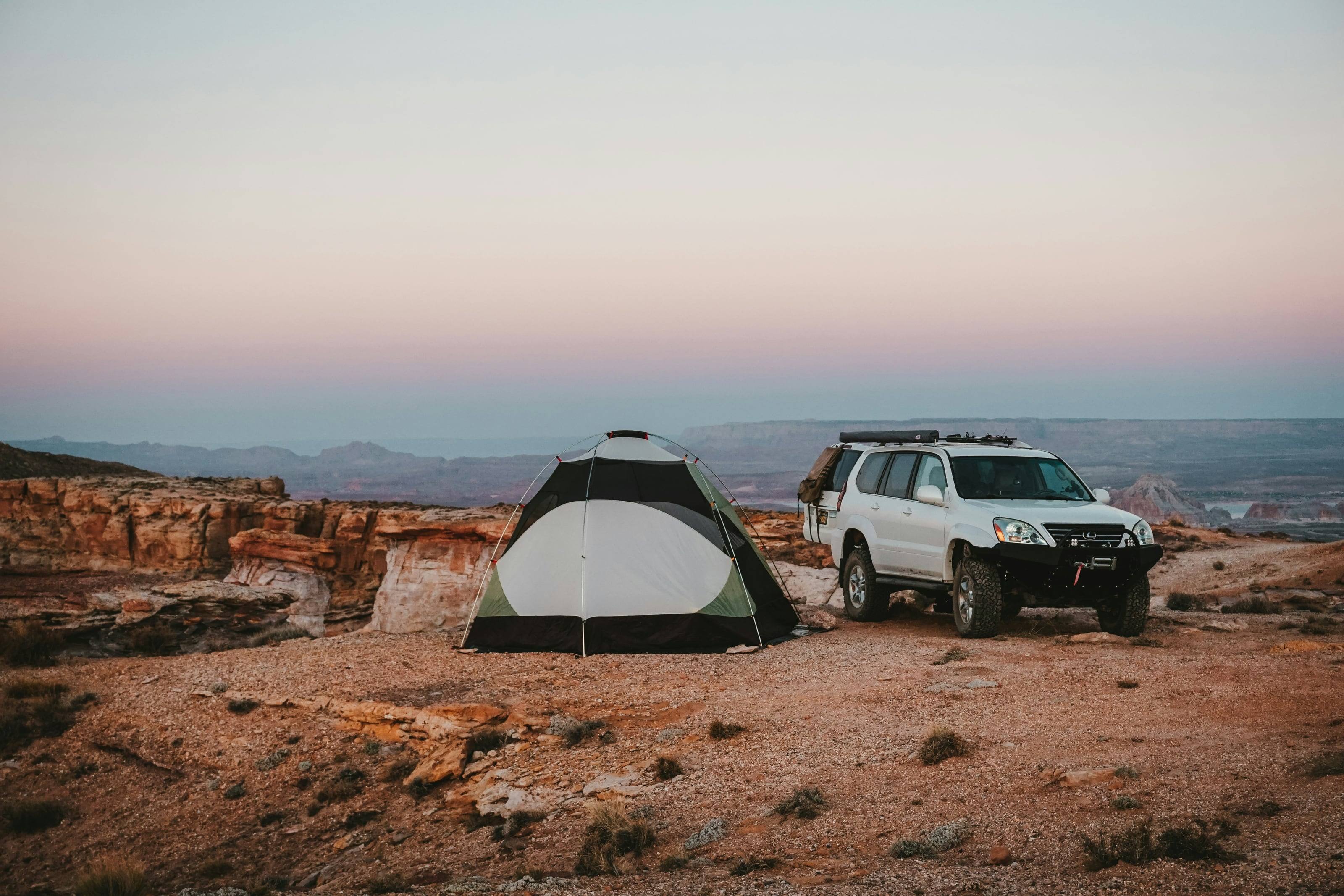
The camp kitchen is used more often than any other part of a build, three times a day, usually in the wind, often in the dark. What makes one good is not its capacity but how few movements it takes to get a hot drink out of it.
Two things beyond convenience decide what you should carry: what remains legal when fire restrictions are in force, and how food must be stored where there are bears. Both are set by the agency whose ground you are on, and both are written down.
The stove is the one thing that keeps working
Fire restrictions arrive every summer, and they arrive in stages. What survives them, on national forest after national forest and on Bureau of Land Management ground, is the same piece of equipment: a pressurised liquid or gas stove with a valve.
The Colville National Forest states it as plainly as anyone. Under Stage 1 restrictions, campfires are prohibited outside designated rings at posted developed campgrounds, "however, pressurized or bottled liquid fuel stoves, lanterns, or heating devices are permitted, provided such devices are used in areas that are barren or cleared of all overhead and surrounding flammable material within 3 feet of the device. Device must have a functioning on-off switch or valve that can extinguish the fire immediately."
At Stage 2 on that forest, fires are not allowed anywhere, and the same exemption still holds for valved pressurised stoves and lanterns, including propane campfires. The Coconino National Forest words its exemption as a stove or grill "solely fueled by pressurized liquid petroleum or pressurized liquid petroleum gas", and the Bureau's Upper Colorado River District exempts "devices using pressurized liquid or gas" at both stages. What is prohibited at Stage 2 is anything burning solid fuel: wood, charcoal, briquettes.
So the rule that follows is simple. Carry a stove that runs on pressurised fuel and has a shut-off valve, and you can cook almost anywhere, almost any summer. Rely on a fire or on charcoal and you will eventually be eating cold food.
Do not skipStages are general and each forest or district writes its own. Nothing here tells you what is in force today; only the managing office's current page does. Check it the morning you leave.
Source 1
Fuels, in practice
Propane is the default for vehicle travel: cheap, universally available, unbothered by altitude, and the fuel most exemptions are written around. Its costs are bulk and cold-weather performance, since the pressure in the bottle falls as the temperature does.
Isobutane canisters are lighter and lovely to use, and they cost more per meal and leave you with empty canisters to dispose of. Liquid fuel stoves burn white gas and sometimes petrol, work well in serious cold, and need priming and occasional maintenance.
Whatever it burns, look for the thing the restrictions describe: a valve that shuts the flame off at once. A stove you extinguish by letting it burn out is not one you can use under a fire restriction.
Source 2
Fridge or cooler
A compressor fridge holds a set temperature, needs no ice, and runs on the house battery. It is the single biggest improvement most people make to how they eat, and it is also the largest continuous load on the electrical system, which is why the two decisions belong together.
A cooler costs a fraction of the price and needs no electrical system at all. What it needs is ice, and a plan for the water. The FDA's guidance is worth following either way: keep cold food at 40 degrees Fahrenheit or below, pack drinks in a separate cooler from perishable food so the lid opens less, limit how often you open it, and use a thermometer rather than a guess.
The number to remember is the danger zone. Food should not sit between 40 and 140 degrees for more than two hours, or one hour when it is above 90 outside. In a vehicle in summer that clock runs fast, which is the real argument for a fridge.
Source 8
A kitchen that sets up in minutes
The design goal is that a hot drink costs you one action. Everything in one place, reachable from outside the vehicle, with the stove, the fuel, a pot, a mug and the water within arm's reach of each other. If making tea means opening three containers, you will skip meals.
A slide or a drawer at the back of the vehicle achieves that, and so does a single well-packed box on a table. What matters is not which, but that the kitchen has one home and everything returns to it.
What separates a good kitchen from a heap of equipment
- 01One place for everything, reachable without moving other gear
- 02A stove that lights in wind, with a valve and a windscreen
- 03A wash system: two basins, biodegradable soap, and a way to strain the water
- 04A bin that closes, because rubbish is an attractant
- 05Rated storage for food where bears are, and a plan for it every night
Bear country: the rule is storage, not tidiness
The Park Service defines the problem wider than most people expect. A bear "considers anything with a scent to be food. This can include canned goods, bottles, drinks, soaps, cosmetics, toiletries, trash, ice chests, sunscreen, bug repellant, fuel, items used for preparing or eating meals". All of it must be stored properly. Yosemite goes further and counts ice chests as food even when empty.
What "properly" means depends on where you are. Some parks require food lockers or certified containers; others allow a bag hung from a tree. The Forest Service order for the Northern Continental Divide grizzly area lists the acceptable methods: secured in a hard-sided vehicle, trunk, cab or trailer; in a hard-sided building; suspended at least ten feet up and four feet out from any upright support; in an approved bear-resistant container; or inside an approved and operating electric fence.
In many parks you may store food inside a car during daylight only, out of sight with the windows closed, and never in a pickup bed or strapped to the outside of a vehicle. Yosemite requires a locker after dark. Hard-sided trailers and RVs are acceptable when closed up; pop-up and soft-sided campers are not.
Certification is not magic. The Interagency Grizzly Bear Committee says plainly that its certification "does NOT guarantee that a product is BEAR-PROOF", that certified coolers must actually be locked, because "an unlocked cooler is not considered bear resistant", and that its list does not mean a product is approved on every public land. Match the number on the product to the list, and check the rules of the place you are going.
Do not skipNever store food in a tent or a backpack, never burn food scraps, tea bags or coffee grounds in a campfire, because partly burned matter still draws animals, and secure everything the moment you arrive rather than at bedtime.
Source 4
Washing up and waste
Wash dirty dishes immediately: a pan left out is an invitation. Carry water 200 feet from any stream or lake to wash, use a small amount of biodegradable soap, strain the solids into your rubbish and scatter the water.
Rubbish is food as far as the rules are concerned. In grizzly country it must be stored exactly as food is, and everywhere else it belongs in a container that closes, inside the vehicle overnight. Pack out everything, including the things that seem harmless: orange peel, egg shells, the coffee grounds.
Source 6
Never cook in an enclosed space
This is the one part of the kitchen that kills people. The Consumer Product Safety Commission publishes it without qualification: people die every year of carbon monoxide poisoning from portable camping heaters, lanterns and stoves used inside tents, campers and vehicles, and the risk is greater at altitude.
Carbon monoxide is, in the CDC's words, "an odorless, colorless gas that kills without warning". Its symptoms are flu-like: headache, dizziness, weakness, upset stomach, vomiting, chest pain, confusion. Someone asleep can die before feeling any of them. Never burn charcoal indoors, never use a camp stove indoors, and if a generator is running, keep it more than 20 feet from any window, door or vent.
Cook outside, or under an awning open on at least two sides. Fit a carbon monoxide alarm in any vehicle people sleep in and replace it on its maker's schedule or every five years. If anyone develops cold or flu-like symptoms while camping, get them into fresh air and see a doctor.
Do not skipA stove in a closed vehicle or tent is the most dangerous thing in this guide. There is no safe way to do it, and rain is not a reason.
Source 9
Where to buy it
Stoves, fridges, storage boxes and certified containers come from camping equipment shops and overland outfitters, who will also know which containers the land managers near them accept. A fridge that is going to be wired in belongs with the electrical work: see the power guide, and the van and RV service centres in the directory.
Questions people ask
Can I still cook when fire restrictions are in force?
Almost always, with the right stove. Forest and Bureau of Land Management restrictions at both common stages exempt pressurised liquid or gas stoves and lanterns that have a valve able to extinguish the flame at once, used on ground cleared of flammable material for three feet. Solid fuel, including charcoal and briquettes, is what gets banned.
What counts as food in bear country?
Far more than food. The Park Service includes canned goods, bottles, drinks, soap, cosmetics, toiletries, rubbish, ice chests, sunscreen, insect repellent, fuel and anything used to prepare or eat a meal. Yosemite counts an empty ice chest.
Is a certified bear-resistant cooler enough?
Only if it is locked and only where that land manager accepts it. The Interagency Grizzly Bear Committee says certification does not mean bear-proof, that an unlocked cooler is not bear resistant, and that its list does not automatically approve a product everywhere.
How cold does a cooler need to be?
The FDA says cold food should be at 40 degrees Fahrenheit or below, and that food should not sit between 40 and 140 degrees for more than two hours, or one hour above 90 degrees outside. Use a thermometer.
Can I use my stove inside the vehicle if it is raining?
No. The Consumer Product Safety Commission says people die every year using stoves, heaters and lanterns inside tents, campers and vehicles. Cook outside or under an open awning.