Anza-Borrego Desert State Park is the largest state park in California, more than 600,000 acres reaching from the eastern slopes of the Peninsular Ranges into Imperial County and from Riverside County almost to the Mexican border. State Parks counts more than 500 miles of established dirt roads in it and calls auto-touring one of the most popular things to do here.
What makes it unusual for an overlander is the camping policy. The park’s own regulations define the entire backcountry as a camping facility, and its primitive camping rules tell you how far off the road a vehicle may sit rather than pointing you to a numbered site. This guide sets out those rules, what the park asks of a vehicle, and how it describes its seasons and hazards. Road by road conditions are posted by the park itself, and that is where to check before you drive.
Why go
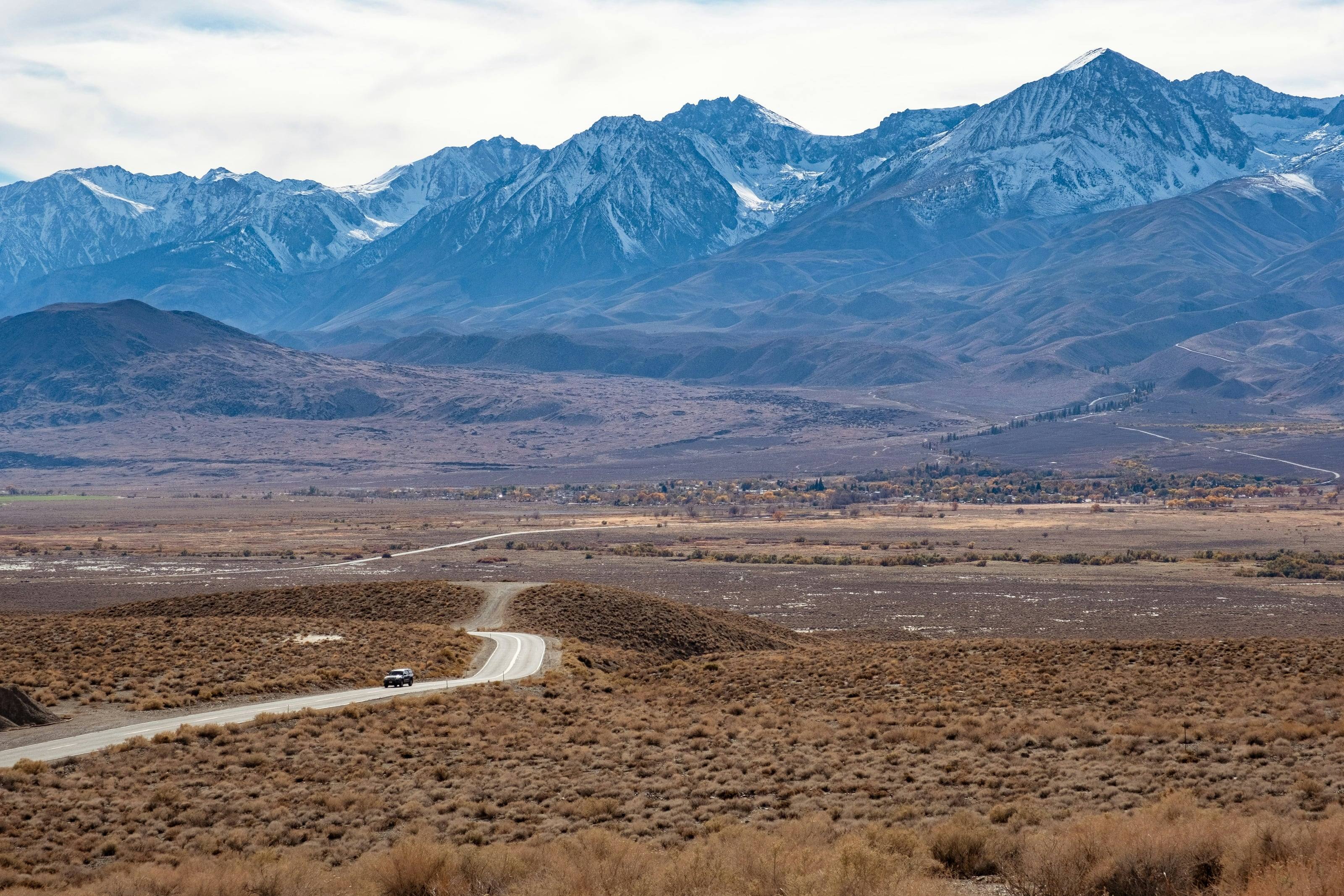
State Parks describes Anza-Borrego as some of the most diverse desert landscape in the world: washes, palm groves, cacti and long views, with kit foxes, mule deer and the endangered Peninsular bighorn sheep that gives the park half its name. Nearly two-thirds of it is wilderness, and it sits at a crossroads of early California travel, its pathways used by the explorer Juan Bautista de Anza, the Southern Emigrant Trail, the Butterfield Stage and the Mormon Battalion.
For a driver the appeal is the road network that reaches into all of that, and the fact that you can sleep beside it. The park is also an International Dark Sky Park, with Borrego Springs recognized as a Dark Sky Community.
Spring brings the wildflowers and the crowds. State Parks says they usually start blooming in force in late February or early March, that cactus varieties bloom at all elevations but at different times, and that it is often impossible to predict how the plants will respond to a given year’s rain and temperature. A recorded wildflower message runs on (760) 767-4684.
Source 5
When to go
The park runs on a desert calendar and publishes it through its services. Reservations are available October 1 through April 30. The Visitor Center is open daily from October 1 to May 31, and on weekends and holidays only from June 1 to September 30.
Several places close for the same summer stretch. State Parks lists annual seasonal closures effective June 1 to September 30: Coyote Canyon to public use and occupancy from Lower Willows in San Diego County to the northern park boundary in Riverside County, Vern Whitaker Horse Camp, Tamarisk Grove Campground and some sites and loops at Borrego Palm Canyon. Sheep Canyon Campground is listed as open to the public from October 1 to May 31.
Source 1
The roads
State Parks counts more than 500 miles of established dirt roads and says auto-touring is among the most popular activities in the park. It sets expectations for them too: desert terrain changes with weather and occasional seismic activity, most dirt roads require all-wheel drive or 4x4, and some areas can only be traversed with a high clearance vehicle.
The detail sits in the park’s own road conditions table, which rates each road 2WD or 4WD with comments on sand, ruts and rock under a revision date. Read it before you leave, because this guide deliberately reports none of it. The park’s summary of what those roads involve is blunt enough: many of them traverse washes with deep sand and require 4x4 only, with the capacity to air down tires.
The park magazine gives a sense of what the ratings mean in practice. Font’s Point, four miles of sandy dirt road to a view over the Borrego Badlands, is marked 4WD required, as are 17 Palms by way of Arroyo Salado and the Wind Caves. Split Mountain via Fish Creek is a rocky, sandy wash requiring high clearance as well as 4WD, and Sandstone Canyon needs high clearance 4WD. The Blair Valley roads, by contrast, are usually accessible by two-wheel-drive vehicles.
Source 2
What your vehicle needs
The legal requirement is short. The California Vehicle Code applies to every road in the park, dirt, sandy wash or paved. All vehicles must be highway legal and must remain on designated roads. Off-highway vehicles are prohibited inside Anza-Borrego, and State Parks points OHV users to the neighboring Ocotillo Wells State Vehicular Recreation Area instead.
Then the practical standard. The park encourages drivers to seek out 4x4 driving courses before exploring unpaved roads, noting that desert driving is not typically covered in driver education, and it asks you to be prepared to self-rescue and to travel with a second vehicle on dirt roads.
What State Parks says to carry
- 01A shovel, a tow strap and a tire pressure gauge, so you can self-rescue.
- 02Sufficient fuel, water and food for the trip, plus blankets, flashlights and battery power for phones.
- 03Water at a gallon per person per day, and the discipline to turn around when your water is half gone.
- 04A first aid kit you are familiar with, and a hard-copy map, because cell coverage is spotty or non-existent.
- 05An itinerary left with a friend or relative, including your vehicle’s make, model, color and license plate.
Do not skipIf something goes wrong, the park’s brochure says to stay with your car and put the hood up to signal. If you must try to hike out, wait until the cool of evening.
Source 2
Open camping, as the park publishes it
The key sentence is in the park’s regulations: “The entire backcountry area of Anza-Borrego Desert State Park is defined as a camping facility.” Occupancy by the same people, equipment or vehicles of any camping facility in the park is limited to 30 days in any calendar year.
The rules that follow are the park’s primitive camping rules, and they are mostly about where the vehicle sits and what you take away with you. State Parks does not publish a permit or registration requirement for backcountry camping. If you are unsure about a spot, ask at the visitor center.
There are campgrounds as well: Borrego Palm Canyon and Tamarisk Grove are developed, and Bow Willow, Mountain Palm Springs, Culp Valley, Sheep Canyon, Arroyo Salado, Yaqui Pass, Yaqui Well, Fish Creek and Blair Valley are primitive camps. In a campground, sites are limited to 8 people and 2 vehicles, quiet hours run from 10 pm to 6 am, and generators may run only between 10 am and 8 pm.
The primitive camping rules
- 01Vehicles must be parked no more than one vehicle length off the road, where they will not disturb any natural features.
- 02Do not trample vegetation or drive over geological features.
- 03Ground fires are not permitted. All campfires must be in a metal container with a bottom and sides, or a camp stove.
- 04Bring your own firewood and take your cooled ashes out with you. Gathering or taking any live, dead or downed vegetation is prohibited.
- 05There is no garbage collection in the backcountry: pack out all your garbage, including toilet paper and human waste.
- 06All natural and cultural features are protected. Nothing may be removed or disturbed, and posted rules apply in cultural preserves.
- 07Drones are prohibited in the park, and so are firearms and fireworks.
Source 4
Fires and fire restrictions
The metal container rule has a reason. The park gets an average of only six inches of rain a year, which it says is not enough to wash away fire scars or encourage biological removal of charring and soot, so scars from fires built by Native Americans long ago are still visible today.
On top of that standing rule, the park imposes fire restrictions during extreme heat, fire danger warnings or when firefighting resources are limited. Under those restrictions open fires, including campfires and barbecues, are prohibited at Blair Valley and Culp Valley primitive campgrounds and at any backcountry campsite and day-use parking area, and portable propane or gas stoves are permitted for cooking only within designated campsite and day-use areas. Call (760) 767-4037 for current fire restrictions.
Source 4
Fuel, water and services
State Parks does not list fuel inside the park. Its advice is to fill the tank before you set out, because depending on your location the nearest town with amenities can be remote, and to carry sufficient fuel, water and food on dirt roads. Borrego Springs sits in the middle of the park and the park’s magazine points visitors to its businesses. Confirm anything you plan to depend on.
Water is on you. The park’s advice is a gallon per person per day, with the warning not to save water for the trip home. Drinking water is listed among the facilities at the developed campgrounds and the Visitor Center. Cell coverage is described as extremely limited or non-existent, so plan to be out of contact, and be ready to give GPS coordinates if you have to call 911.
Source 6
Heat, cold and flash floods
Heat comes first. State Parks says summer daytime temperatures can reach 125 degrees, and its brochure pairs that with the other extreme: below freezing in winter. The question the brochure asks is the right one for anyone sleeping in a vehicle here. Will you be comfortable if you have to spend a night or two in your car?
Washes are the roadbed on many routes, so watch the weather upstream as well as overhead. The National Weather Service supplies the numbers that matter in a vehicle: 12 inches of rushing water can carry away most cars, and 2 feet can carry away SUVs and trucks. It is never safe, the agency says, to drive or walk into flood waters.
The rest is ordinary desert care. Rattlesnakes live here and are venomous, so leave them alone. Most desert plants protect themselves with thorns or spines. Dogs are allowed in campgrounds and on designated park roads but not on trails or cross-country, must be on a leash no longer than six feet, and must be in a tent or vehicle at night.
Do not skipTurn around when your water is half gone. That is the park’s own rule, printed in its brochure under the heading “Desert Safety”.
Source 3
Fees and who to ask
As of September 2026 the park’s published fee schedule lists a day use fee of $10 per vehicle, collected at the Visitor Center parking area, at Borrego Palm Canyon, Tamarisk Grove and Horse Camp campgrounds, at the Hellhole Canyon and Borrego Palm Canyon trailhead parking areas, and at the Sheep Canyon, Mountain Palm Springs and Bow Willow primitive camps. Campsite fees are in the same schedule, camping fees include entry for one vehicle plus one legally towed vehicle or trailer, and the park accepts the usual California State Parks passes.
Before a trip, read the park’s road conditions page for the road by road table and its revision date, and its park page for advisories and the annual seasonal closures. The Visitor Center answers on (760) 767-4205 and the park office on (760) 767-5311.
Source 1
Questions people ask
Can you camp anywhere in Anza-Borrego?
The park’s regulations define the entire backcountry as a camping facility, and its primitive camping rules require vehicles to be parked no more than one vehicle length off the road, where they will not disturb natural features. Occupancy is limited to 30 days in any calendar year, and campgrounds and closed areas have their own rules.
Do I need a permit to camp in the backcountry?
State Parks does not publish a permit or registration requirement for backcountry camping. It does publish primitive camping rules on parking, fires and packing out waste, and a 30-day yearly limit. Large groups in campsites may require a special event permit.
Can I have a campfire?
Only in a metal container with a bottom and sides, or a camp stove. Ground fires are prohibited, you bring your own firewood, and you pack out cooled ashes. During fire restrictions, open fires are prohibited at Blair Valley and Culp Valley primitive campgrounds and at all backcountry campsites. Call (760) 767-4037 for current restrictions.
Do I need four-wheel drive?
For most of the dirt network, yes. State Parks says most dirt roads require all-wheel drive or 4x4, some areas need high clearance, and many roadways involve traversing washes with deep sand that require 4x4 with the capacity to air down tires. Its road conditions table rates each road.
Are OHVs allowed in the park?
No. Only street-legal vehicles are permitted, and they must remain on designated roadways. State Parks directs OHV recreation to the neighboring Ocotillo Wells State Vehicular Recreation Area.
When is the best time to visit?
The park’s services point to the cooler half of the year: reservations run October 1 to April 30, the Visitor Center is open daily from October 1 to May 31, and several areas including Coyote Canyon north of Lower Willows close annually from June 1 to September 30. Wildflowers usually start blooming in force in late February or early March.
 Bureau of Land Management (BLM)
 US Forest Service (USFS)
 National Park Service (NPS)
 US Fish and Wildlife (USFW)
 Bureau of Reclamation (USBR)
 Department Of Defense (DOD)
 Bureau of Indian Affairs (BIA)
 Other Federal
 State
 Local
 Alaska Native Lands (Patented or Interim Conveyed)
 Alaska Native Allotment
 Road
 Primitive Road
 Road
 Primitive Road
 Trail
 Roads open to all Vehicles, Yearlong
 Roads open to all Vehicles, Seasonal
 Roads open to highway legal vehicles only, Yearlong
 Roads open to highway legal vehicles only, Seasonal
 Special Designation, Yearlong
 Special Designation, Seasonal
 Trails open to all vehicles, Yearlong
 Trails open to all vehicles, Seasonal
 Trails open to vehicles 50" or less in width, Yearlong
 Trails open to vehicles 50" or less in width, Seasonal
 Trails open to motorcycles, Yearlong
 Trails open to motorcycles, Seasonal
 Special Designation, Seasonal
 Trails Open to Wheeled Vehicles Only < 50" in Width, Yearlong
 Trails Open to Wheeled Vehicles Only < 50" or Less in Width, Seasonal
 Wilderness Area
 Wilderness Study Area