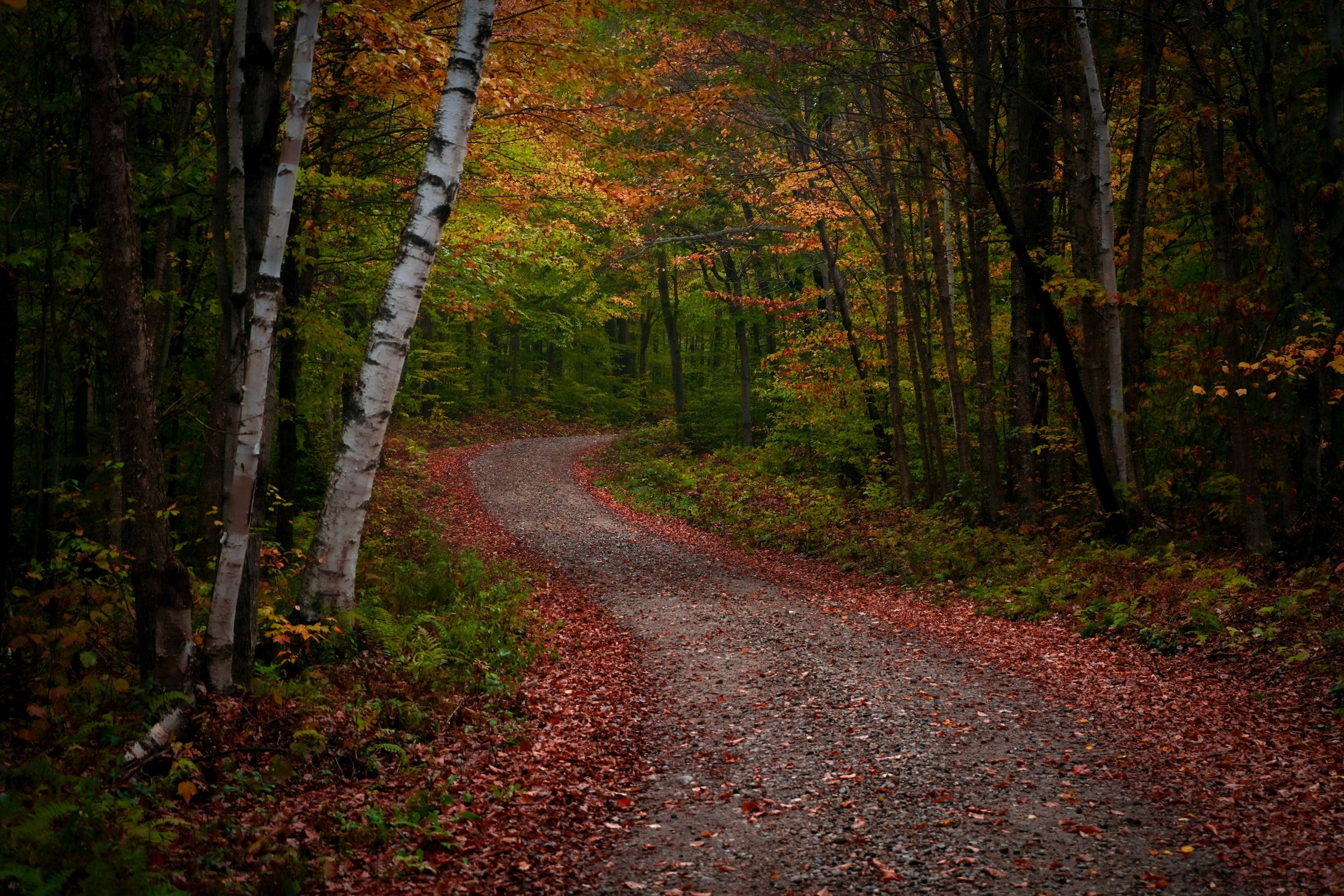
Where the motor vehicle rules are looser than in the Forest Preserve
acres of conservation easement open to the public 16
900K+
Working private forest; access can be suspended while logging is under way
Suspension for wet gravel, not for rock
New York is a low state with a hard winter: Mount Marcy tops out at 5,344 feet and the towns in this guide run from 21 feet at Patchogue to 1,901 at Tannersville. The load case is washboard and pothole over a long day, not articulation over ledges.
Tell a shop you want damping that survives a few hundred miles of frost-heaved gravel and a vehicle loaded for a week, and that you will be doing it in spring when the surface is at its worst. Ride height buys nothing on roads that stay narrow by constitutional requirement.
A suspension shop matches spring rates and shock valving to the vehicle's real loaded weight, corrects the geometry that a lift changes, and aligns it afterward. On an overland vehicle the goal is control and durability under constant load, not maximum height.
The work usually includes
01Coil and leaf springs rated for the load
02Shocks: monotube, remote reservoir or adjustable
03Control arms, track bars, driveline and brake line corrections
04Air bags or helper springs for heavy rear loads
05Alignment after the work
06Advice on gearing when tire size goes up
How to choose a suspension shop
The right shop asks about weight before it asks about height.
01Weigh the vehicle loaded, or ask the shop to. Choosing springs without a weight is a guess.
02Ask what else the lift changes on your platform: alignment range, driveline angles, brake lines, headlight aim and driver-assistance sensors.
03Ask whether they align in house.
04Ask for the least height that clears your tires and keeps the geometry happy. More lift is not better.
05Ask how it will ride at both ends of your use: empty around town and loaded on washboard.
What to have ready before you ask for a quote
Weight is the number that matters.
01Year, model and drivetrain
02Current tire size and the size you want to run
03Everything bolted on: bumper, winch, rack, tent, drawers, water
04Loaded weight, if you have been across a scale
05How you use it, and a budget range
Questions people ask
How much lift do I need?
Less than you think. Most overland travel is dirt roads, washboard and the occasional ledge, and the vehicle spends its life loaded. Enough lift to clear a sensible all-terrain tire, with springs rated for your weight, usually drives better and breaks less than a tall kit.
Why does my truck sag in the back?
Because the factory springs were chosen for an empty truck. Drawers, a fridge, water, a tent and a rear bumper add constant weight. The fix is springs rated for that constant load, sometimes with air bags for the occasional heavy trip.
Do bigger tires mean I need new gears?
Larger tires make the engine and transmission work harder and change the speedometer reading. Whether re-gearing is worth it depends on the tire size, the vehicle and how much weight you carry. A shop that knows your platform can tell you where the line is.
How high is New York?
From Patchogue at 21 feet to Mount Marcy at 5,344.
Altitude decides what your engine, your brakes and your lungs have to work with, and how late in the year the passes open.
02,0004,0006,000
Feet above sea level
Towns
TannersvilleThe Kaaterskill and North-South Lake approach1,901 ft
Lake PlacidServices and fuel before the Whiteface highway and the High Peaks1,795 ft
Indian LakeThe eastern gate of the Moose River Plains road, by way of Cedar River Road1,747 ft
Old ForgeThe western gateway, and the road in to the Moose River Plains by way of Inlet1,740 ft
Long LakeMid-Park fuel on Route 30, between the Perkins tracts and the north1,674 ft
Tupper LakeLast full services heading west across the Park1,592 ft
NewcombThe Blue Ridge Road approach to the Boreas Ponds tract1,559 ft
Saranac LakeThe largest village in the north-central Park, and the Floodwood Road approach1,544 ft
Cranberry LakeRemote northwest Park, near the Five Ponds country1,495 ft
SalamancaThe gateway to Allegany State Park, the largest in the state system1,379 ft
North CreekUpper Hudson services on the Park’s eastern edge1,033 ft
PhoeniciaCentral Catskills services below Stony Clove Notch826 ft
Watkins GlenThe town for the Finger Lakes National Forest, the only one in the state459 ft
Lake GeorgeThe Prospect Mountain highway and the Lake George Wild Forest roads352 ft
MontaukThe eastern end of the beach fishing permit, open around the year31 ft
PatchogueThe mainland side of Fire Island, where the ferries leave21 ft
Passes, high roads and summits
Mount MarcyThe state high point, in Essex County. The published USGS figure; our own reading of the elevation surface at its map point gives 5,333 ft5,344 ft
Whiteface MountainOur own reading of the elevation surface at its map point. No agency publishes a summit figure on a page that opened4,858 ft
Slide MountainThe highest of the Catskills. The Catskill master plan gives 4,180 ft and our own reading agrees exactly4,180 ft
Hunter MountainOur own reading of the elevation surface at its map point, in Greene County4,030 ft
Blue MountainOur own reading of the elevation surface at its map point, in Hamilton County3,760 ft
Indian PassOur own reading of the elevation surface at its map point, in the High Peaks2,852 ft
Stony Clove NotchOur own reading of the elevation surface at its map point, on the Catskill road between Phoenicia and Hunter2,103 ft
Prospect MountainProspect Mountain Veterans Memorial Highway2,030 ft
Pass, road and summit elevations are the figures published by the agency that manages them. Town elevations are the town’s or county’s own
figure where it publishes an exact one; the rest are from the U.S. Geological Survey (3D Elevation Program at the place’s official coordinates),
retrieved September 18, 2026. Every source is listed at the foot of the page.
Free build quotes
Looking for suspension shops in New York? Tell us about the project and get free quotes.