Prospect Creek, in the Interior, January 23, 1971. The highest is 100 degrees at Fort Yukon in 1915
Keeping a camper alive through an Alaskan winter
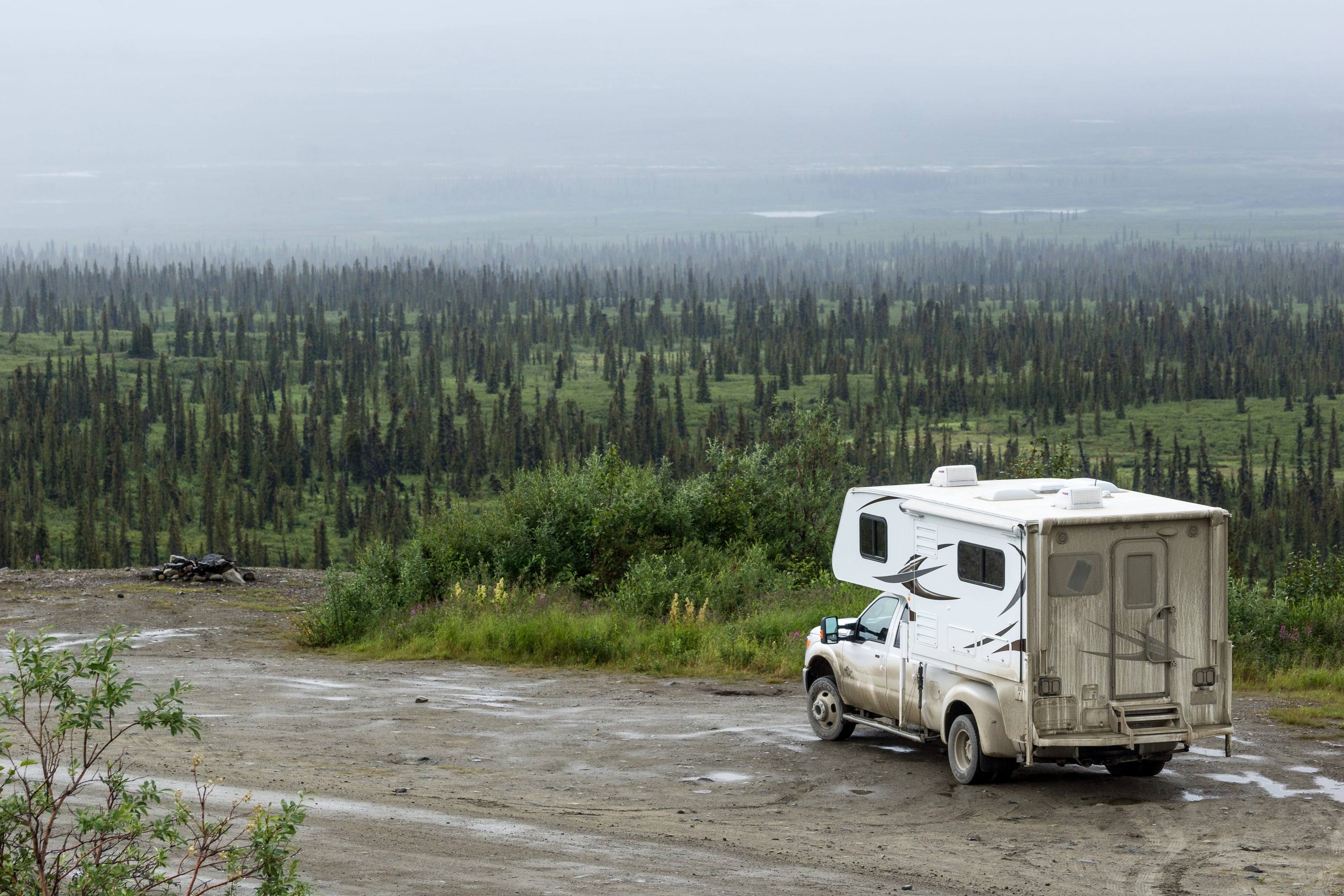
Freeze protection is the whole job. The state record low is 80 below zero, and even the maintained Dalton corridor sees winter windchills to 70 below. Ask a service center how it winterizes, and how it would set up a rig that is lived in rather than stored. Size is a service question too: the Park Service does not encourage large vehicles on the McCarthy Road, where one-lane bridges and railroad remnants do the damage, and there is no dump station or hookup anywhere along the Dalton’s four BLM campgrounds.
A camper van, truck camper or expedition vehicle has two sets of systems, and most mechanics only want one of them. RV and van service centers work on the living side: the 12-volt system, heat, water, ventilation and everything that leaks or rattles loose after a season of dirt roads.
Typical work
01House battery, charging, solar and inverter diagnosis
02Diesel and propane heaters, and water heaters
03Plumbing, pumps, tanks and winterizing
04Roof fans, air conditioning, windows and seals
05Appliance service and leak repair
How to choose a service center
These systems are brand-specific, and so is the training.
01Ask which brands of heater, battery and inverter they are trained on.
02Ask if they will work on owner-built or small-builder vans. Some will not touch wiring they did not install.
03Ask about turnaround in season. Service backs up in spring and summer.
04Bring documentation: a wiring diagram, a component list and photos from the build.
What to have ready before you ask for a quote
Model numbers save a phone call.
01The vehicle or camper, and who built it
02The components: battery type and size, inverter, heater model
03What it is doing, and when
04Photos of the installation
05Where and when you can drop it off
Questions people ask
My heater stopped working at altitude. Is it broken?
Maybe not. Fuel-burning heaters can struggle at high elevation and may need an altitude setting or kit, and they soot up if they only ever run on low. A service center that knows the brand can check it and set it up for where you camp.
Can a shop add solar or lithium to an existing system?
Usually, but lithium batteries need compatible charging from the alternator, solar and shore power. A shop should look at the whole system rather than swap the battery and hope.
How do I winterize a van?
Drain or protect anything that holds water: tanks, pump, lines, water heater and filters. How you do that depends on how the system was built, so ask the builder or a service center to show you once.
How high is Alaska?
From Valdez at 20 feet to Mount McKinley at 20,310.
Altitude decides what your engine, your brakes and your lungs have to work with, and how late in the year the passes open.
CantwellOn the Parks Highway at the west end of the Denali Highway.2,212 ft
ChickenOn the Taylor Highway in the historic Fortymile gold mining district, between Tetlin Junction and Eagle.1,700 ft
TokOn the Alaska Highway, 64 miles north of Slana on the Tok Cutoff by the Park Service’s reckoning. The Taylor Highway leaves at Tetlin Junction nearby.1,638 ft
GlennallenOn the Richardson Highway. The Park Service tells Nabesna Road travelers to fill up here, 76 miles south of Slana.1,414 ft
Delta JunctionOn the Richardson Highway between the Denali Highway junction at Paxson and Fairbanks.1,168 ft
ColdfootDalton Highway milepost 175, with the last tire and repair service before Deadhorse and the Arctic Interagency Visitor Center.1,058 ft
EagleEnd of the Taylor Highway on the Yukon, 160 miles from Tetlin Junction.877 ft
CircleEnd of the Steese Highway at mile 162, on the Yukon River. The BLM notes the town sits about 50 miles south of the Arctic Circle.585 ft
ChitinaEnd of the Edgerton Highway and the start of the McCarthy Road, off the Richardson 30 miles south of Glennallen.570 ft
FairbanksThe hub for everything north. The Richardson and the Parks both end here, the Steese leads northeast out of town, the Elliott begins at Fox on the Steese, and the Dalton starts 84 miles up the road.445 ft
PalmerOn the Glenn Highway where the byway turns up the braided Matanuska River toward the canyon.250 ft
AnchorageWhere the Glenn and the Seward highways meet. The Glenn Highway National Scenic Byway starts downtown.104 ft
HomerWhat the state’s byway page calls the end of the road on the Sterling Highway.101 ft
SewardThe southern end of the 127-mile Seward Highway, an All-American Road, on the Kenai Peninsula.89 ft
DeadhorseThe north end of the Dalton at milepost 414. Public access stops here, about 8 miles short of the Arctic Ocean.45 ft
ValdezSouth end of the Richardson Highway on Prince William Sound. The road out of town climbs straight into Thompson Pass.20 ft
Passes, high roads and summits
Mount McKinleyThe highest point in North America, in Denali National Park and Preserve. No road goes near it20,310 ft
Atigun PassDalton Highway milepost 244, where the road crosses the Continental Divide4,739 ft
Atigun PassDalton Highway: Livengood, 84 miles north of Fairbanks, to Deadhorse at Prudhoe Bay4,739 ft
Eagle SummitSteese Highway: Fairbanks to Circle on the Yukon River3,668 ft
Thompson PassRichardson Highway: Valdez on Prince William Sound to Fairbanks2,794 ft
Broad PassGeorge Parks Highway: Anchorage to Fairbanks, by the entrance to Denali National Park and Preserve2,400 ft
Pass, road and summit elevations are the figures published by the agency that manages them. Town elevations are the town’s or county’s own
figure where it publishes an exact one; the rest are from the U.S. Geological Survey (3D Elevation Program at the place’s official coordinates),
retrieved September 18, 2026. Every source is listed at the foot of the page.
Free build quotes
Looking for RV and van service centers in Alaska? Tell us about the project and get free quotes.